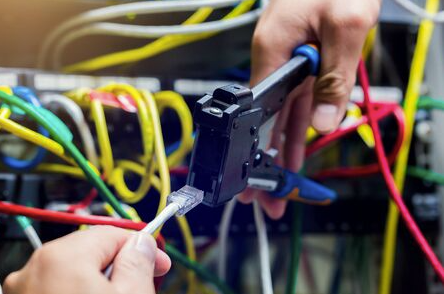
In the rapidly evolving world of telecommunications, the choice of cabling plays a crucial role in ensuring efficient and reliable network performance. One solution that has gained significant attention is the round 3.0mm soft cable. Designed for versatility and durability, this type of cable has become a standard in fiber-to-the-home (FTTH) and other high-speed fiber optic networks.
A round drop cable is engineered to provide a compact, yet robust pathway for optical fibers. Its circular design allows for flexible installation, whether it is aerial, duct, or wall-mounted, while maintaining the integrity of the fibers inside. This makes it an ideal option for network operators aiming to deliver consistent and high-quality connectivity to end users.
Key Features of Round Drop Cable
One of the standout features of the round drop cable is its all-around durability. The cable typically includes a protective outer sheath, which shields the fibers from environmental stresses such as moisture, UV radiation, and mechanical impact. In some cases, additional strength members are incorporated to increase tensile strength, making the cable suitable for aerial deployments where wind and tension are factors.
The round design also offers ease of handling and installation. Unlike flat or ribbon cables, the circular shape allows for smoother feeding through ducts and conduits, reducing the risk of damage during deployment. Its flexibility ensures that installers can navigate tight bends and complex pathways without compromising fiber performance.
Another important feature is scalability. Round drop cables come in a variety of fiber counts, enabling network providers to match the cable configuration to specific network demands. This modularity supports future expansion and makes it easier to manage and maintain the network as requirements evolve.
See also: Redefining Everyday Convenience in Luxury Bags
Applications in Modern Networks
Round drop cables are widely used in FTTH deployments, connecting the main fiber backbone to individual homes or businesses. Their design supports both aerial and underground installations, making them adaptable to diverse environmental conditions and infrastructure layouts.
In addition to residential applications, round drop cables are also suitable for enterprise networks, small to medium business campuses, and municipal fiber projects. Their durability and flexibility allow operators to implement high-speed networks that support streaming services, cloud computing, and other bandwidth-intensive applications.
Moreover, round drop cables simplify network management. Their single-fiber structure allows for easier splicing and termination, reducing both installation time and operational costs. This is particularly beneficial for densely populated areas where rapid deployment and minimal disruption are priorities.
Installation Best Practices
To maximize the performance and longevity of a round drop cable, careful installation is essential. Maintaining the recommended bend radius and avoiding excessive tension during pulling are critical steps to prevent fiber damage. Proper anchoring and support in aerial installations also ensure long-term stability.
Regular inspection and preventive maintenance, such as checking for sheath integrity and monitoring fiber performance, further enhance network reliability. By following these best practices, network operators can maintain consistent connectivity and reduce potential downtime.
Conclusion
The round drop cable is a versatile and reliable choice for modern fiber optic networks. Its durable construction, flexible design, and scalability make it ideal for FTTH, enterprise, and municipal deployments.
By integrating round drop cables into network infrastructure, operators can achieve high-speed, stable connections while minimizing installation challenges and long-term maintenance. As demand for faster and more extensive fiber networks continues to rise, the round drop cable remains a practical solution for building efficient, future-ready communication systems.