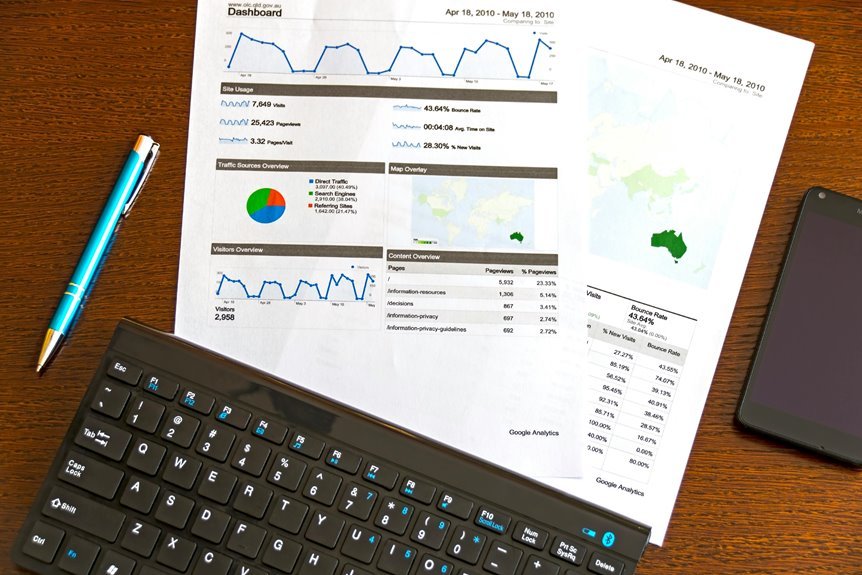
The Global Enterprise Dashboard represents a significant advancement in data management for organizations. Its integration of real-time insights and advanced visualization tools positions it as a critical resource for decision-making. By fostering collaboration and aligning data with strategic objectives, it enhances overall efficiency. However, the effectiveness of its implementation remains a crucial consideration. What strategies can organizations adopt to maximize the potential of this powerful tool?
Key Features of the Global Enterprise Dashboard
While organizations increasingly rely on data-driven decision-making, the Global Enterprise Dashboard stands out for its comprehensive suite of features designed to enhance visibility and control.
Key features include advanced data visualization tools that transform complex datasets into intuitive graphics, enabling quicker insights.
Furthermore, user customization options allow individuals to tailor their dashboards, ensuring that relevant information aligns with specific organizational goals and personal preferences.
Benefits of Using a Unified Data Platform
A unified data platform offers significant advantages for organizations seeking to optimize their decision-making processes.
By facilitating seamless data integration across various sources, it enables businesses to access comprehensive insights.
This holistic approach not only enhances analytical capabilities but also supports informed choices, driving efficiency and responsiveness in a rapidly changing market.
Ultimately, it empowers organizations to harness their data for strategic advantage.
Enhancing Collaboration With Real-Time Insights
Real-time insights significantly enhance collaboration within organizations by providing teams with immediate access to relevant data and analytics.
By leveraging real-time analytics, employees can make informed decisions swiftly, fostering a culture of responsiveness.
Collaborative tools integrated with these insights facilitate seamless communication and alignment, empowering teams to work collectively towards shared objectives.
Ultimately, this drives innovation and efficiency in a dynamic business environment.
Strategies for Implementing the Dashboard Effectively
Implementing a global enterprise dashboard requires a strategic approach to ensure its effectiveness across various departments.
Key strategies include comprehensive dashboard training to equip users with necessary skills and fostering user adoption through continuous feedback.
Engaging stakeholders early in the process can enhance commitment, while tailored solutions for diverse teams ensure the dashboard meets unique needs, promoting a culture of informed decision-making.
Conclusion
In navigating the complexities of modern data management, the Global Enterprise Dashboard emerges as a beacon for organizations striving to gain a competitive edge. By uniting disparate data streams and fostering collaboration, it enables teams to harness insights that drive strategic decisions. As organizations increasingly recognize that time is of the essence, leveraging such a unified platform not only enhances efficiency but also positions them to thrive in an ever-evolving market landscape. Ultimately, this dashboard is a game changer.