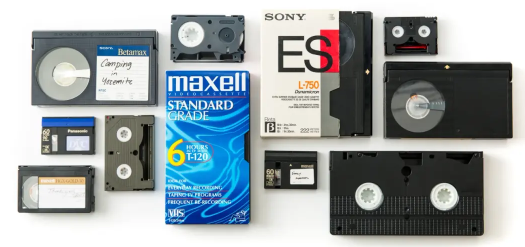
You slide a VHS cassette out of a cardboard sleeve that has not been opened in years. The label is handwritten. A birthday. A wedding. A child’s first steps. The tape feels solid enough, so you press play with confidence. A few seconds pass. The picture wobbles. Colors bleed. The sound drifts in and out. Then the tape stops altogether.
Moments like this feel personal, yet the cause sits firmly in science. VHS tapes were never built to last forever. Most begin to fail somewhere between twenty and thirty years, and many show damage far earlier. The reason has little to do with nostalgia and everything to do with chemistry, physics, and mechanical stress.
Why VHS longevity was always limited?
When VHS entered homes in the late 1970s, it solved a short-term problem. Families wanted a simple way to record television and save home movies. Engineers focused on affordability and convenience. Long-term archival life ranked far lower on the list.
The materials used in VHS reflected that goal. Manufacturers chose components that worked well at the time and kept costs down. Those choices delivered a format that performed reliably for years, yet quietly aged from the moment recording began.
What does a VHS tape actually contain?
A VHS cassette looks like a single object, but it holds several layers that behave very differently as time passes.
At the center sits a thin polyester film that gives the tape its shape. On top of that film rests a magnetic coating made from tiny particles that store video and audio signals. Holding those particles in place is a binder, which acts like glue. A light lubricant coats the surface to reduce friction as the tape moves through a VCR.
The binder plays a critical role, and it also ages the fastest. Once it weakens, the entire structure starts to fail.
How magnetic recordings slowly fade?
VHS stores information through magnetic alignment. Each image and sound exists as a pattern of magnetized particles. These patterns remain stable for a time, then gradually drift.
Heat accelerates this drift. So does natural molecular movement inside the tape. Over the years, the magnetic signal loses clarity. The change happens quietly and steadily, long before a tape reaches the end of its life.
What viewers see reflects this process. Colors lose accuracy. Fine detail softens. Audio gains hiss or drops out without warning. None of this requires physical damage. Time alone can erase magnetic memory.
Moisture and the chemistry that breaks tapes down
Air contains moisture, and tape binders absorb it. When that happens, chemical bonds inside the binder start to break apart. This reaction weakens the layer that holds magnetic particles to the tape.
As degradation progresses, the surface grows tacky. During playback, the tape drags against the VCR’s heads and rollers. Residue builds. The tape may slow, squeal, or stop entirely.
Once this stage begins, playing the cassette often causes lasting harm. The damage does not reverse itself, and each attempt increases the risk of tearing or signal loss.
Playback stress adds wear every single time.
VHS playback involves constant motion. The tape pulls across spinning heads at a precise speed while bending around guides and rollers. Friction stays low at first, then rises as lubricants age and surfaces roughen.
Repeated use stretches the tape slightly. Edges curl. Magnetic coating wears thin. Tracking problems appear as jitter or sudden picture jumps.
A tape that played well years ago can fail after one more run because mechanical wear compounds over time. Nothing dramatic needs to happen. The system simply reaches its limit.
Storage conditions shape how fast damage appears
Many tapes spent years in basements, garages, or attics. These spaces expose media to heat cycles, humidity swings, and dust. Each factor speeds chemical change.
Even tapes left untouched age quietly. Polyester film relaxes. Binders continue to absorb moisture. Magnetic alignment weakens whether the cassette moves or not.
Careful storage slows this process but never stops it. Aging continues regardless of handling.
Why does waiting longer reduce recovery chances?
Some assume damaged tapes can always be fixed later. That belief leads many families to postpone action. The science points the other way.
As binders degrade and signals fade, less information remains to recover. Stabilizing playback works best while the material still holds together. Past a certain point, sections of video vanish entirely.
Time stands as the one variable no technician can control. Each passing year narrows what can be saved.
See also: How Technology Is Changing Influencer Marketing
Where does digitization fit into preservation?
Digitization does not restore VHS to its original condition. What it does offer is protection from further physical loss. Once a tape plays cleanly enough to capture, its contents no longer depend on aging plastic and magnetism.
Professional transfer relies on inspection, cleaning, and real-time capture with equipment designed for unstable media. This approach reduces stress on fragile tapes and locks their remaining signal into a stable digital format. For families weighing next steps, a reputable VHS to digital service often becomes part of that conversation because it shifts risk away from the original cassette.
Closing Thoughts
The quiet failure of a VHS tape often feels sudden, yet the science behind it has been unfolding for decades. Chemical breakdown, magnetic drift, and mechanical wear work together slowly and without warning. By the time playback problems appear, much of that process has already taken place.
What matters most is not the format itself, but what it carries. Home videos capture voices, expressions, and moments that were never meant to be recreated. VHS served as a bridge for those memories, not a permanent vault. Knowing why tapes wear out removes the mystery and replaces it with clarity. The sooner people understand the limits of aging media, the more control they have over what can still be preserved.